Serving Confidence: Best Practices for Dietary Information & Food Labeling at Events
Serving Confidence: Best Practices for Dietary Information & Food Labeling at Events
By: Katelyn Petrillo, CPCE, DMCP
Food is often one of the most memorable parts of an event. But when a guest isn’t sure what they can eat, it can quickly become a source of stress.
Allergies, intolerances, cultural and religious considerations, and lifestyle preferences are increasingly part of planning conversations. While accommodating every dietary need may happen behind the scenes, it can have a big impact on the guest experience.
1. Collect: Start with Good Information
The best dietary experience starts long before guests arrive.
Include a dedicated dietary question in registration, with structured options for common needs and an open-text field for anything more specific. If a guest has a complex request, we like to connect with them directly to clarify the details and make sure they’re taken care of. This is especially important for meals that require additional planning, such as Kosher meals or dishes with specific ingredient modifications.

From there, keep all dietary information organized in one place. A master grid can track attendees, meals, dietary needs, and menu modifications. Be sure to distinguish between allergies and dietary preferences, as allergies typically require more careful attention.
Sharing this information with the catering team early gives everyone time to confirm ingredients, substitutions, and special orders. For seated meals, table or seat assignments can also be included in the planning grid, giving servers a discreet way to identify guests receiving an alternative meal.
2. Label: Make Information Clear and Easy to Find
Collecting dietary information is only half the job. Guests also need to know what they’re being served once they arrive.
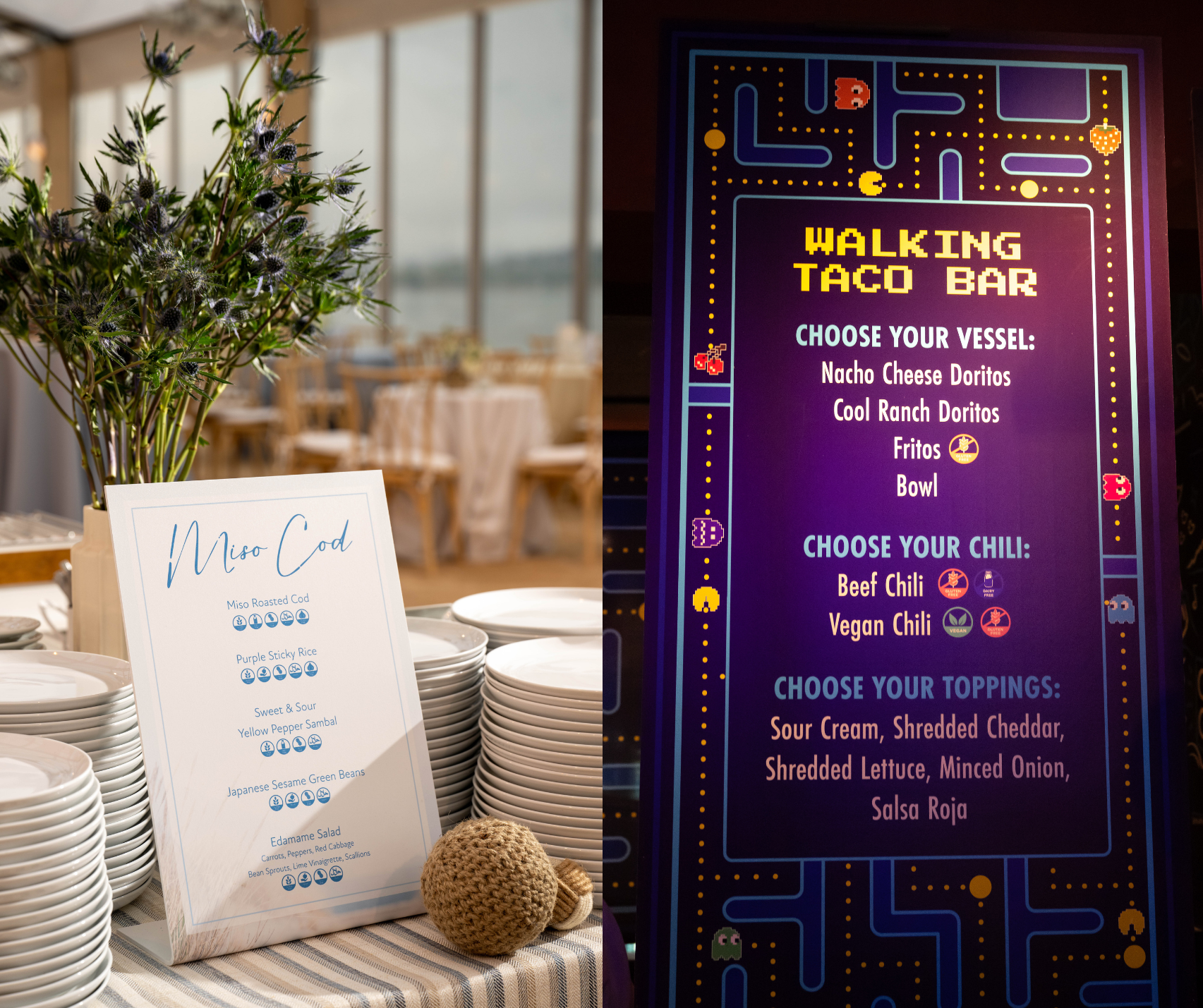
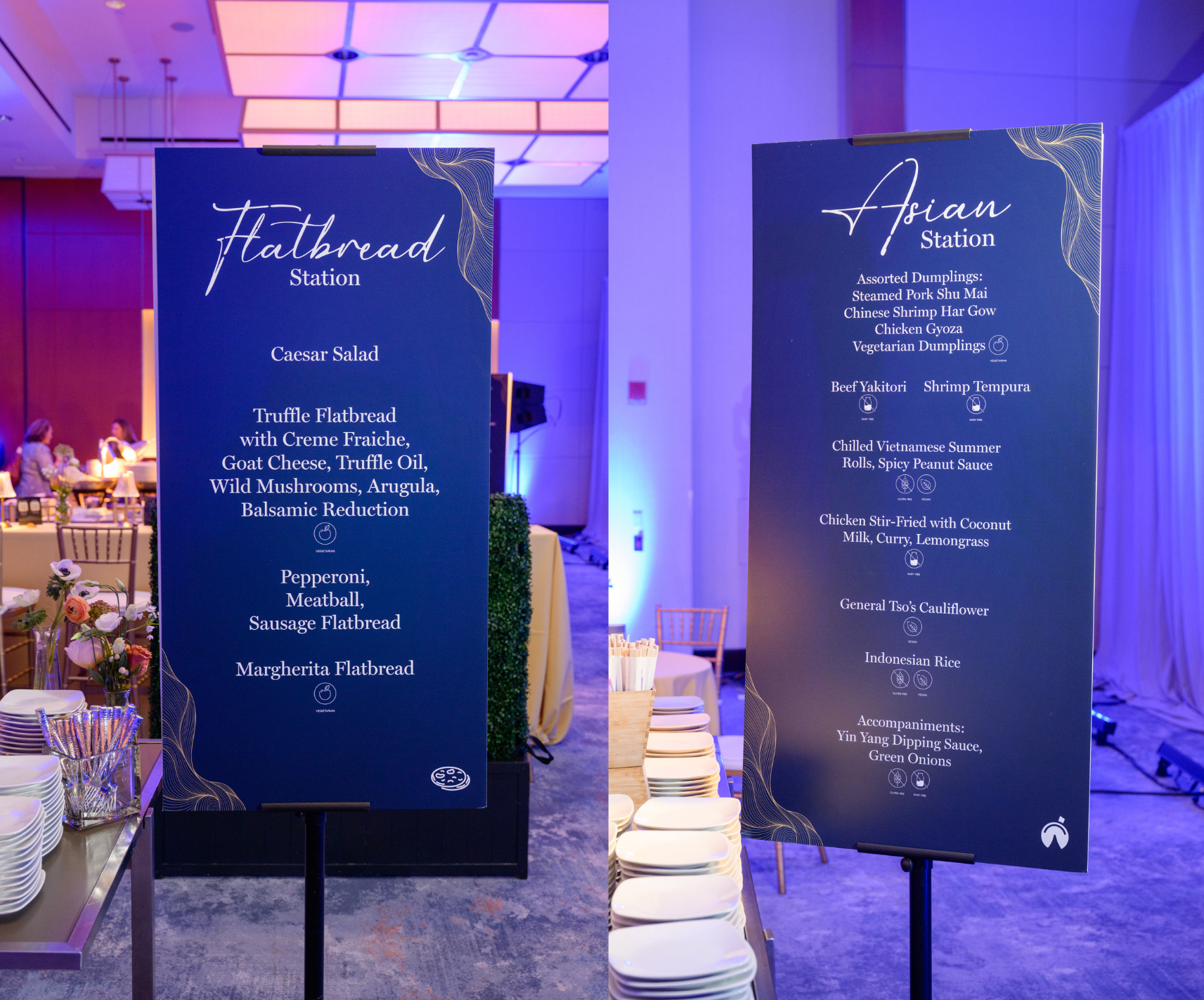
Clear, consistent labeling takes the guesswork out of the experience. Simple icons or short descriptors can quickly communicate allergens and dietary attributes without overwhelming the menu or signage.
For seated dinners, printed menus can list ingredients and dietary markers for each course. Dietary place cards or subtle indicators can also help servers identify guests receiving an alternative meal and make sure the right dish reaches the right person.
For buffets and food stations, each item should have a clear, easy-to-read label with consistent dietary icons or notations. During planning, talk with your catering manager about how the stations will be set and make sure every item is accounted for—from main courses to sauces and dressings. Guests should be able to quickly understand their options without having to ask.
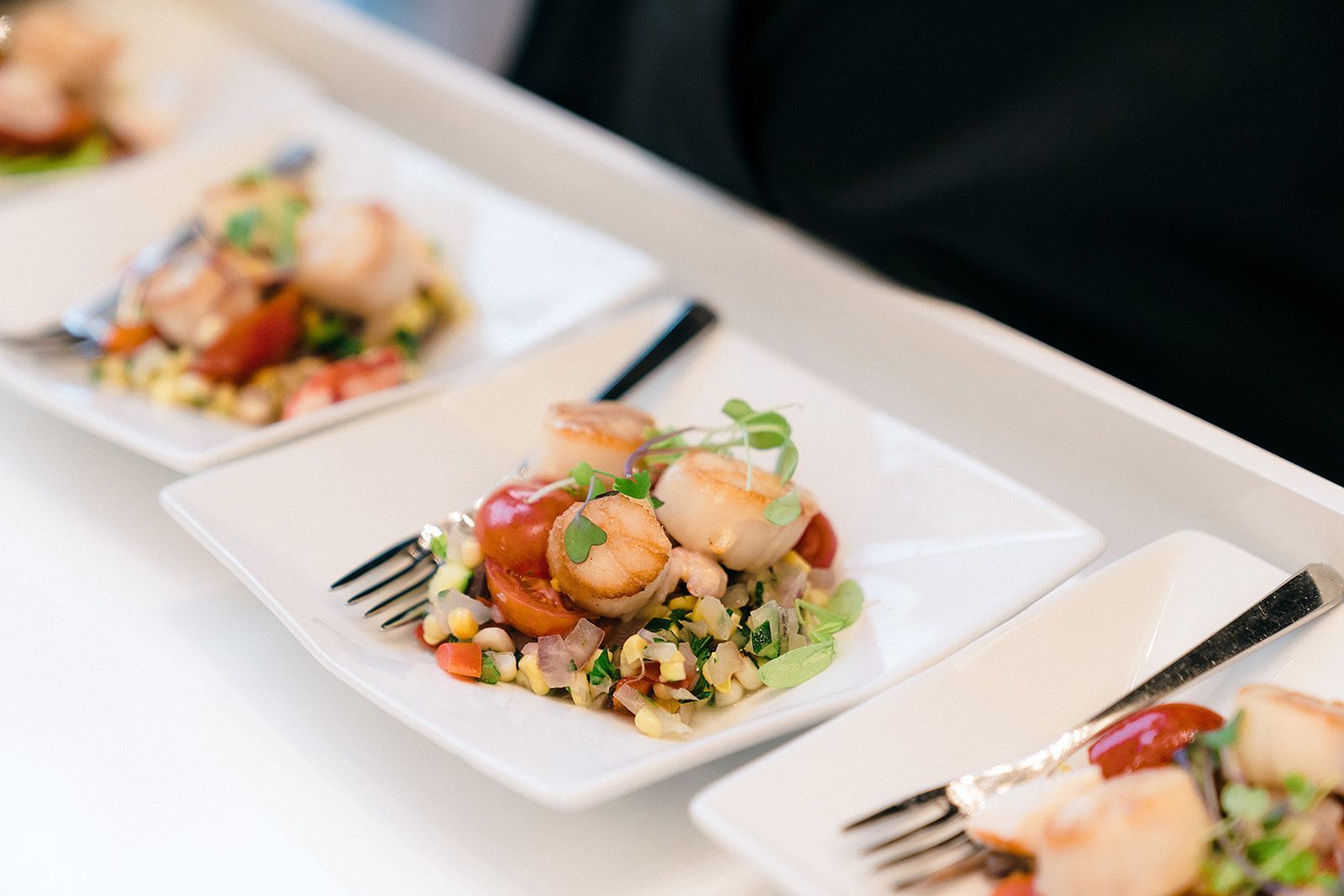
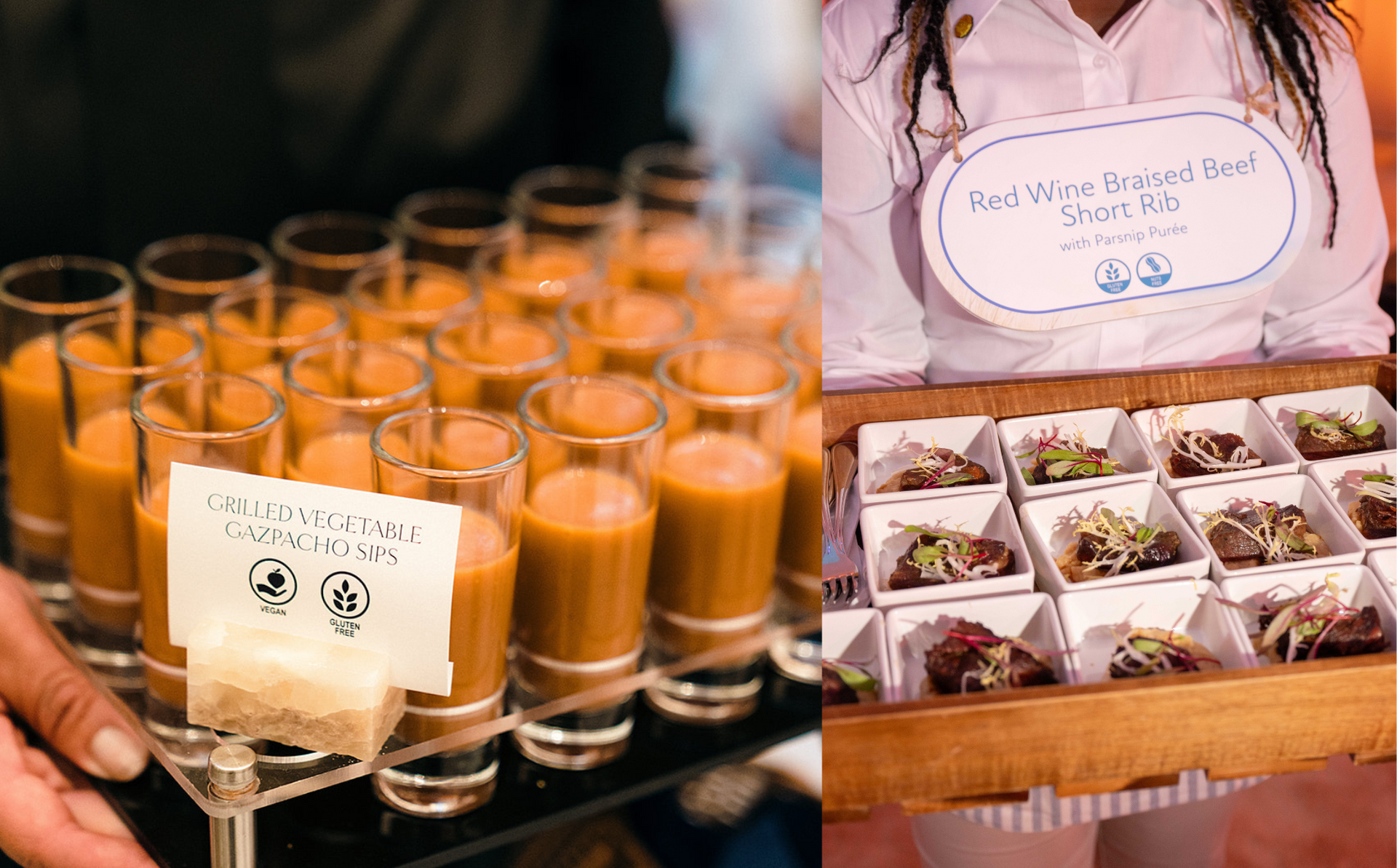
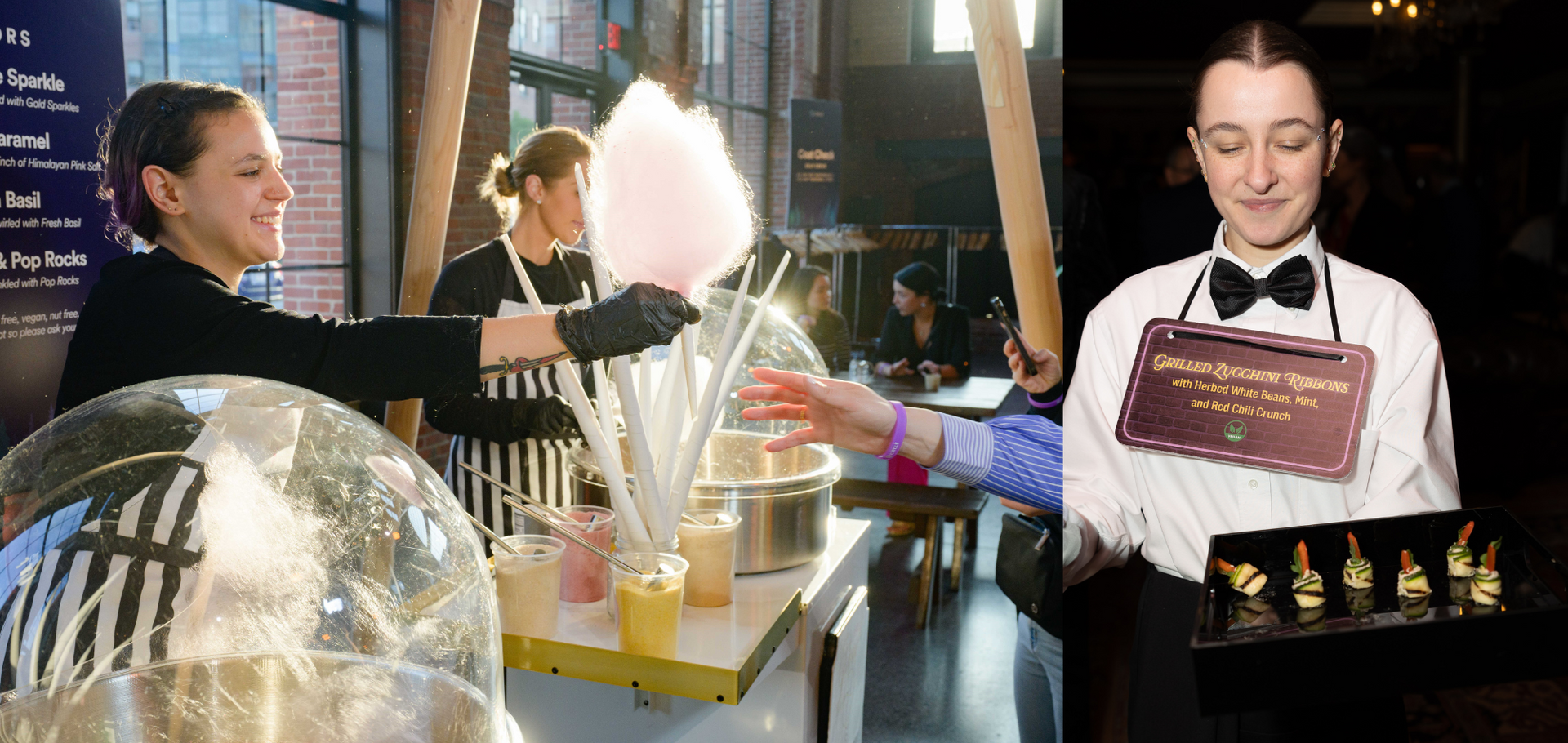
Passed food can be trickier when there isn’t a menu or sign nearby. A small tented card on each tray can identify the dish and relevant dietary information. Or, a personal Corinthian Events favorite: hanging signs for servers to wear around their necks so the food label is right at eye level.
3. Communicate: Keep Everyone on the Same Page
Consistency is key, especially for multi-event programs.
Using the same terminology and icons throughout helps guests quickly understand their options from one event to the next. It also makes it easier for the event team and catering staff to know exactly what each notation means.
For meetings with multiple meals, we also like to create meal cards that guests receive with their name badge at registration. A Kosher guest, for example, can receive a card for each meal to hand to a server and receive their meal without having to repeatedly explain their needs.
And communication shouldn’t stop with the guest. Planners, catering managers, culinary teams, and service staff should all have access to the same information so everyone knows what’s being served, who needs an alternative, and how those meals will be handled.
4. Execute: It Takes a Team Behind the Scenes
A seamless dietary experience doesn’t happen because of a menu icon. It happens because the entire team is aligned.
Before service, back- and front-of-house teams should review dietary notes, ingredients, and special preparations. Staff should know which questions they can answer confidently and when to check with the chef or banquet captain.
The most important rule? Never guess.
We always station a CE F&B manager by the catering door while passed items are circulating to make sure servers know what they are passing and the dietary details before interacting with guests. If a server isn’t sure whether a dish contains an allergen or meets a dietary requirement, they should have a clear path to getting the right answer. Designating a dietary lead or point person can also give the team a reliable resource during service.
When the right information is collected, clearly communicated, and shared with the entire team, dietary accommodations become part of a seamless event experience—not something guests have to navigate on their own.
Small Details Make a Big Impact
Dietary planning may happen behind the scenes, but guests notice when it’s done well.
When someone can confidently understand their options, enjoy their meal, and avoid having to repeatedly explain their needs, that’s hospitality. Thoughtful planning makes service smoother for catering teams, gives planners greater confidence onsite, and most importantly, helps guests feel seen and cared for.